T.T.N.
Trattamenti
Termici Nervianesi
Heat treatment, coating and integrated machining
for high-performance metal components
One contact
one solution
one partner
Steel heat treatment for controlled, repeatable mechanical properties
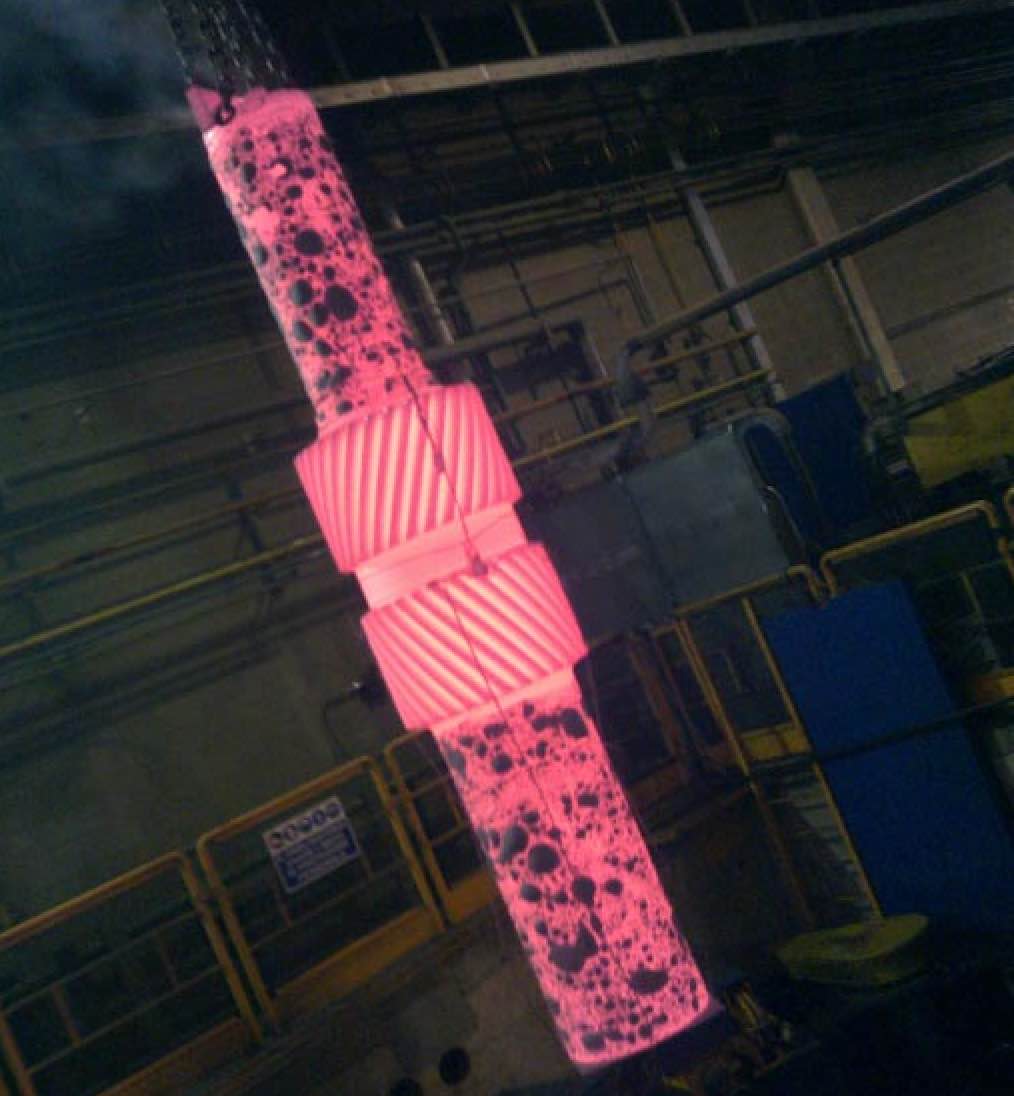
Steel heat treatments are essential processes for modifying material characteristics in a targeted way and adapting them to real operating conditions. Through controlled heating and cooling cycles, the internal structure of the metal can be modified, resulting in components with greater wear resistance, dimensional stability, and long-term reliability.
Each treatment is defined based on three main variables: the type of steel, the geometry of the component, and the operating conditions. This approach makes it possible to select the most suitable cycle, whether the treatment needs to involve the whole component or only its surface. Instead of applying standard solutions, the process parameters are defined according to the component’s material, geometry, and final operating conditions.
From hardening to quenching and tempering, from carburizing to nitriding, through to treatments such as solution annealing and annealing, the objective remains the same: to achieve specific, repeatable mechanical properties, even on complex components or parts intended for demanding operating environments.
T.T.N.
Reliability Forged in Every Treatment
T.T.N.
Main heat treatment processes
Heat treatments are selected according to the component’s required performance, making it possible to improve wear resistance, dimensional stability, and response to operating stresses through controlled thermal cycles.
Hardening
Hardening strengthens steel through controlled heating and cooling cycles, improving resistance to wear and mechanical stresses.
Carburizing
A thermochemical treatment that hardens the component surface while preserving a tougher core, making it suitable for parts subject to wear.
Nitriding
A process that introduces nitrogen into the surface layer, increasing resistance to wear, fatigue, and corrosion without causing distortion of the component.
Solution annealing
A treatment used to homogenize the structure of the material and prepare it for subsequent processing or specific applications.
Quenching and tempering
A heat treatment process consisting of hardening followed by tempering, designed to achieve a balance between material strength and toughness.
Annealing
A process that reduces internal stresses and improves the material’s workability, making subsequent processing easier.
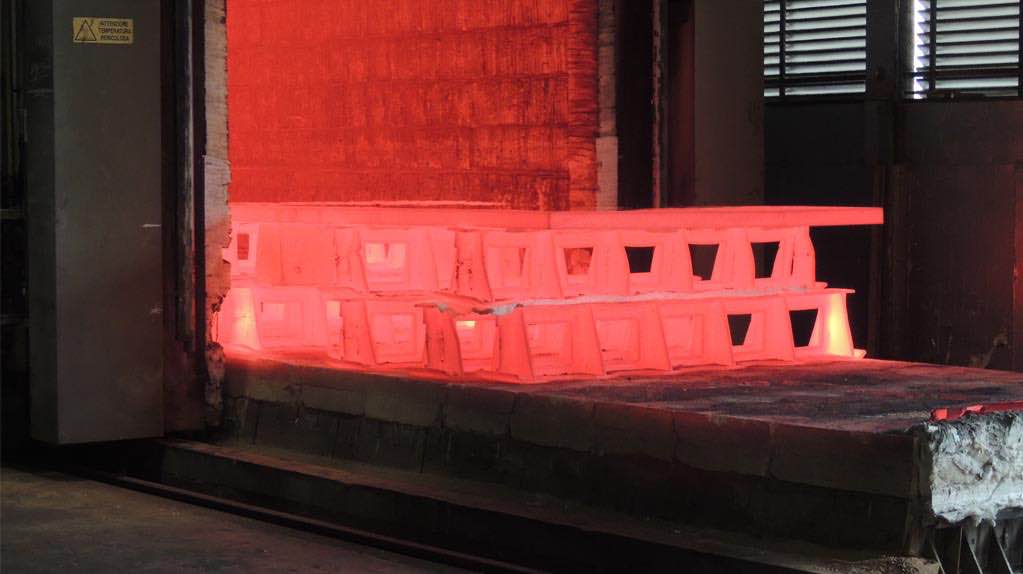
Heat treatment applications
Heat treatment is used across industrial sectors where components must withstand demanding operating conditions and maintain reliable performance over time.
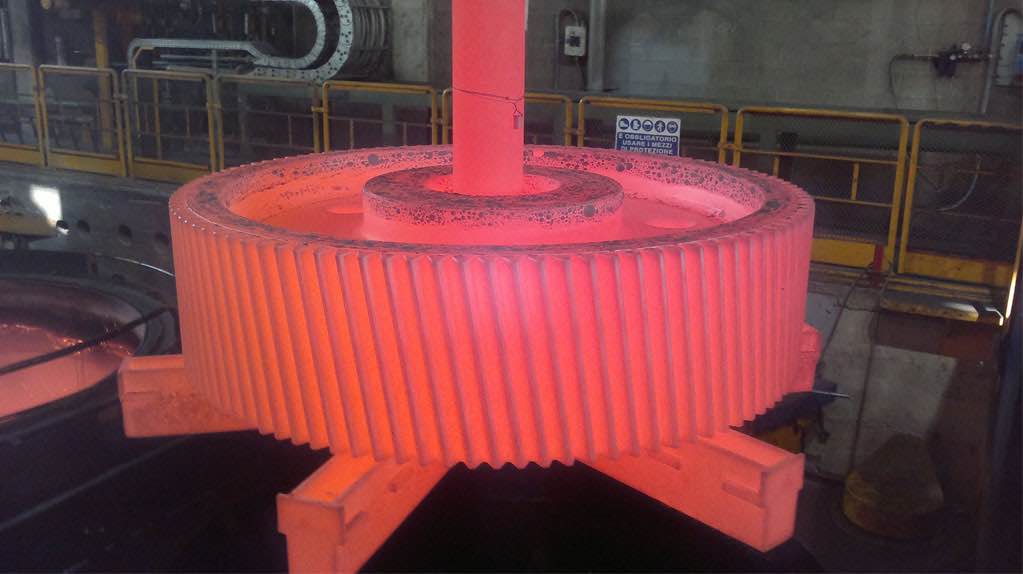
Typical treated components include gears, transmission shafts, valves, industrial system components, tools, dies, and parts exposed to friction or cyclic loads.
These components are often required to operate under high pressure, elevated temperatures, prolonged mechanical stresses, or repeated load cycles. For this reason, each treatment cycle is selected to improve durability, dimensional stability, and long-term performance.
Equipment and operating capacity for heat treatment across different component sizes
Managing heat treatment processes requires equipment suited to the size and characteristics of each component.
T.T.N. S.p.A. is equipped with:
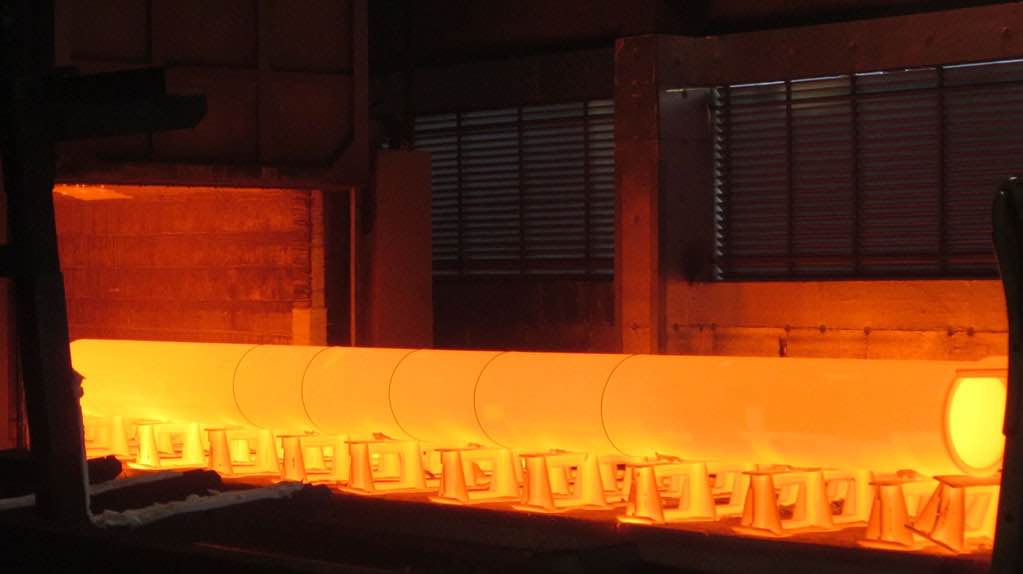
- car-bottom furnaces for treating medium- and large-sized parts, with load capacities of up to 80 tonnes
- water, oil, and polymer quenching tanks for controlled cycles
- semi-automatic lines for repetitive and standardized processes
- continuous furnaces for treating small-sized components
From a production perspective, this setup makes it possible to manage both individual large-sized parts and series production, while maintaining precision and uniformity in the results.
Complementary operations and inspections
To complete the heat treatment process, additional operations and inspections are carried out to ensure component compliance.
These include:
- press straightening to restore component geometry
- non-destructive testing methods, such as magnetic particle inspection (Magnaflux), penetrant testing, and ultrasonic testing, to verify material integrity without altering its characteristics
These activities make it possible to validate the final result and ensure that the component is suitable for its intended use.
2 Heat treatment and surface coating: two complementary processes
These activities make it possible to validate the final result and ensure that the component is suitable for its intended use.
H:2 Heat treatment and surface coating: two complementary processes
Heat treatment and surface coating are not the same process, but they are often used in combination.
Heat treatment modifies the internal structure of the material, while surface coating — including PVD coating — acts on the surface, further improving wear resistance and in-service performance.
The integration of these two processes makes it possible to obtain more durable components suited to particularly demanding operating conditions.