T.T.N.
Trattamenti
Termici Nervianesi
Heat treatment, coating and integrated machining
for high-performance metal components
One contact
one solution
one partner
Quenching and tempering of steels: balancing strength, toughness, and structural reliability
Quenching and tempering is a heat treatment process consisting of hardening followed by tempering, used to achieve an optimal balance between mechanical strength and toughness in steel. It is one of the most widely used treatments when a component must withstand heavy loads, dynamic stresses, and complex mechanical stress conditions without the risk of brittle fracture.
Through this cycle, the material is first hardened and then stabilized through tempering, which reduces internal stresses and improves the component’s behavior under load. At T.T.N. S.p.A., quenching and tempering is defined according to the type of steel, the size of the component, and the operating conditions, with temperature, holding times, and cooling methods calibrated to achieve properties consistent with the technical specifications.
The result is a material with a balanced structure, capable of withstanding complex stresses over time without compromising overall reliability.
Material structure and performance after quenching and tempering
After quenching and tempering, steels develop a more mechanically balanced structure. The combination of hardening and tempering makes it possible to obtain components capable of withstanding heavy loads, absorbing impact, and maintaining stable performance even under cyclic or variable stresses.
This balance between hardness, toughness, and structural stability makes quenching and tempering particularly suitable for components intended to operate in technically complex environments, where material performance directly affects service life and operational continuity.
T.T.N.
When to choose quenching and tempering
Quenching and tempering is used across many industrial sectors for transmission shafts, structural components, and parts subject to dynamic loads. In these applications, the combination of strength and toughness is essential to ensure long-term durability and operational reliability.
High, variable loads
Repeated mechanical stresses
Repeated fatigue stresses
T.T.N.
Reliability Forged in Every Treatment
Operational benefits of quenching and tempering
When properly applied, this treatment delivers tangible benefits:
- better balance between hardness and toughness
- reduced risk of brittle fracture
- greater fatigue resistance
- stable performance over time
These advantages make quenching and tempering an effective choice for applications where the component must maintain consistent performance, even under prolonged stress.
Equipment for quenching and tempering large components
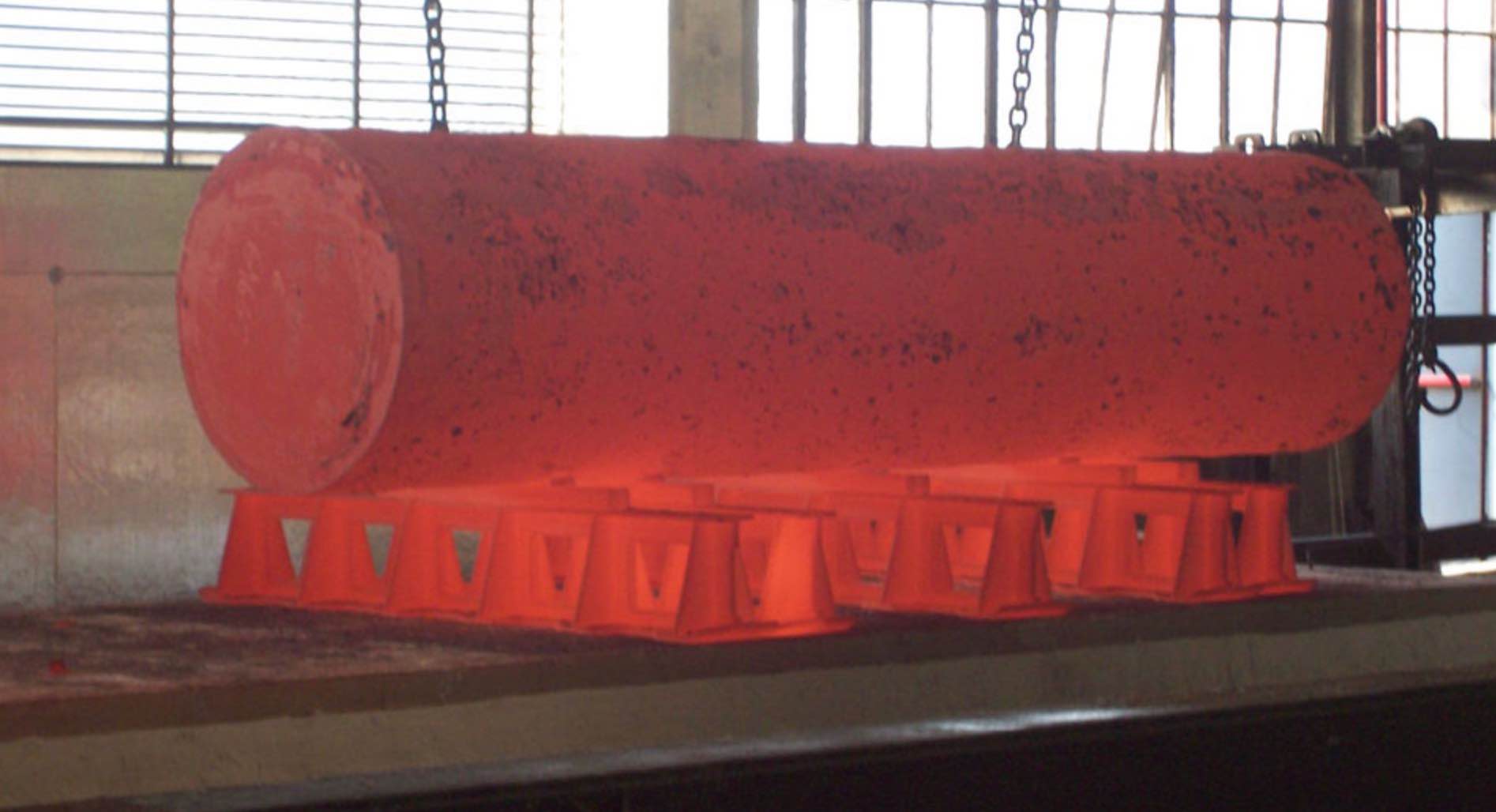
Quenching and tempering can also be applied to medium- and large-sized components thanks to the availability of car-bottom furnaces and suitable handling systems.
T.T.N. S.p.A. is equipped with:
- furnaces for heat treatment of large-sized parts
- water, oil, or polymer quenching systems
- handling systems for heavy components, supported by high-capacity overhead cranes
These features make it possible to treat even complex parts uniformly, while maintaining control over process parameters and final quality.